Streamlining production of audio news at Noa
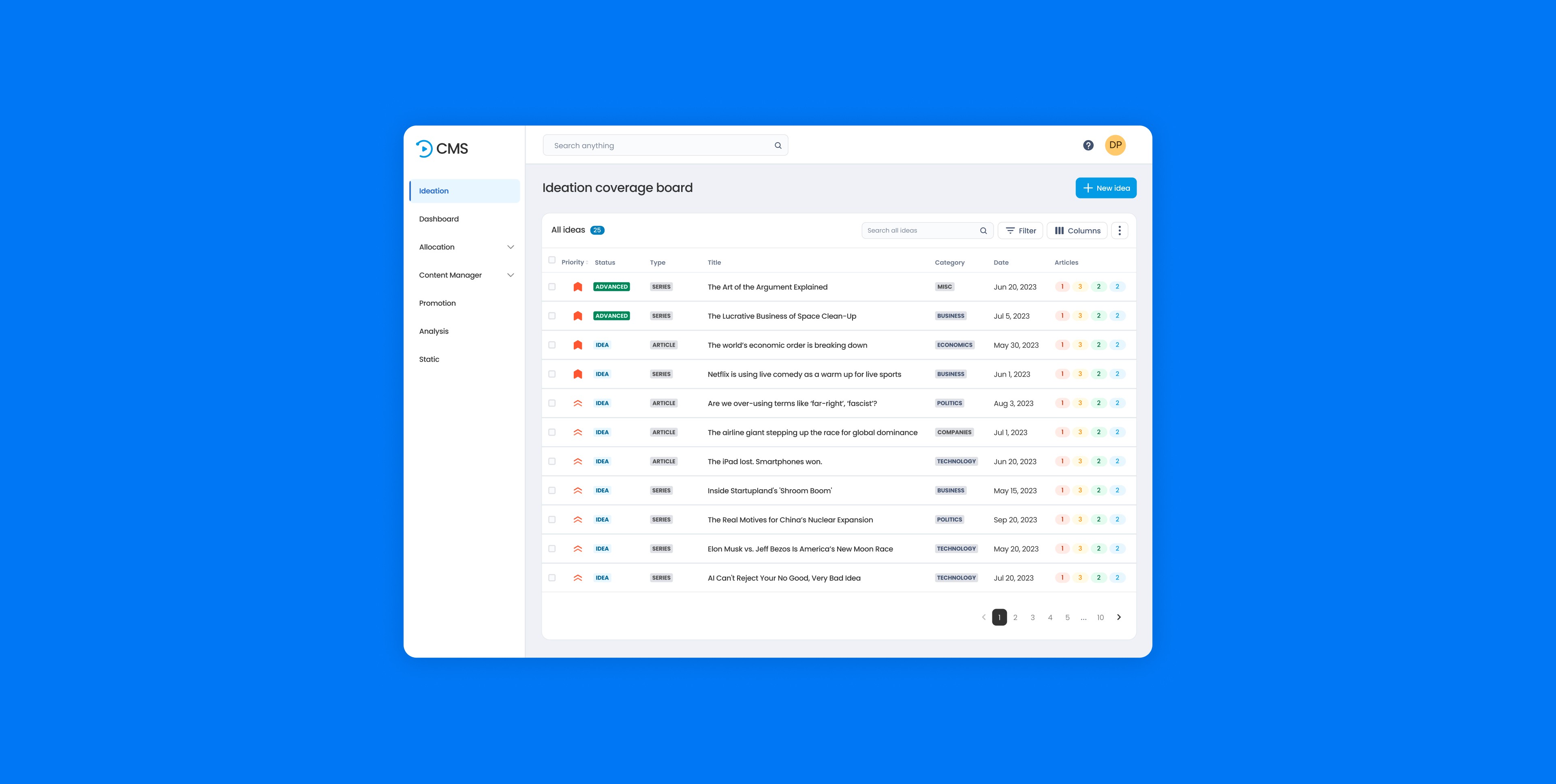
In this project, our mission was to transform the Noa CMS into a robust platform capable of escalating the production of audio articles for the Noa app and five distinguished publishing partners. Our goal was to refine the entire lifecycle of an audio article—from conception to production—ensuring a seamless and efficient process.
Background
Noa delivers an effortless audio news experience through its dedicated app, providing users with a curated selection of engaging audio articles. Beyond its own platform, Noa extends its reach by supplying a diverse range of publishers with high-quality audio content. At the heart of Noa’s operation is its sophisticated CMS, where editors meticulously curate articles for production. This system streamlines the assignment of articles to skilled narrators, oversees the quality assurance process, and manages the myriad tasks involved in bringing audio journalism to life.
Problem Statement
The legacy CMS presented a series of challenges—it was unwieldy, sluggish, and not tailored for peak efficiency. The existing workflow compelled the editorial team to depend on a patchwork of external tools in conjunction with the CMS, which was far from ideal. This fragmented approach not only hampered the team’s productivity but also impeded the collaborative dynamics between editors, voice actors, and other key stakeholders.
Objectives
Integrate all the required editorial features into the CMS
Simplify the UI with a focus on speed and efficiency
Grant powerful tools to the editorial team to enable them to perform flexible work and track it all on the CMS.
Process and Approach
Research
The cornerstone of the Noa CMS redesign involved in-depth discussions with the editorial team and Digital Content Assistants (DCAs). The focus was to meticulously document their challenges. A significant portion of the project was dedicated to delving into their daily workflows, understanding the intricacies of their tasks within the CMS. Additionally, dialogues with narrators shed light on their difficulties in uploading audio articles, while conversations with external stakeholders revealed their expectations for essential features upon logging in.
User flow and empathy
Acknowledging the inefficiencies in the existing user flow, we embarked on designing a new, streamlined user flow that resonated with the editors’ actual work patterns. This led to the development of 2-3 alternative user flow variations, each optimized for different performance metrics, offering a suite of potential solutions.

Wireframing
For each proposed user flow, we crafted low-fidelity wireframes that were subsequently brought to life through prototyping. This approach facilitated flow-based usability testing, allowing us to evaluate the practicality of each design.
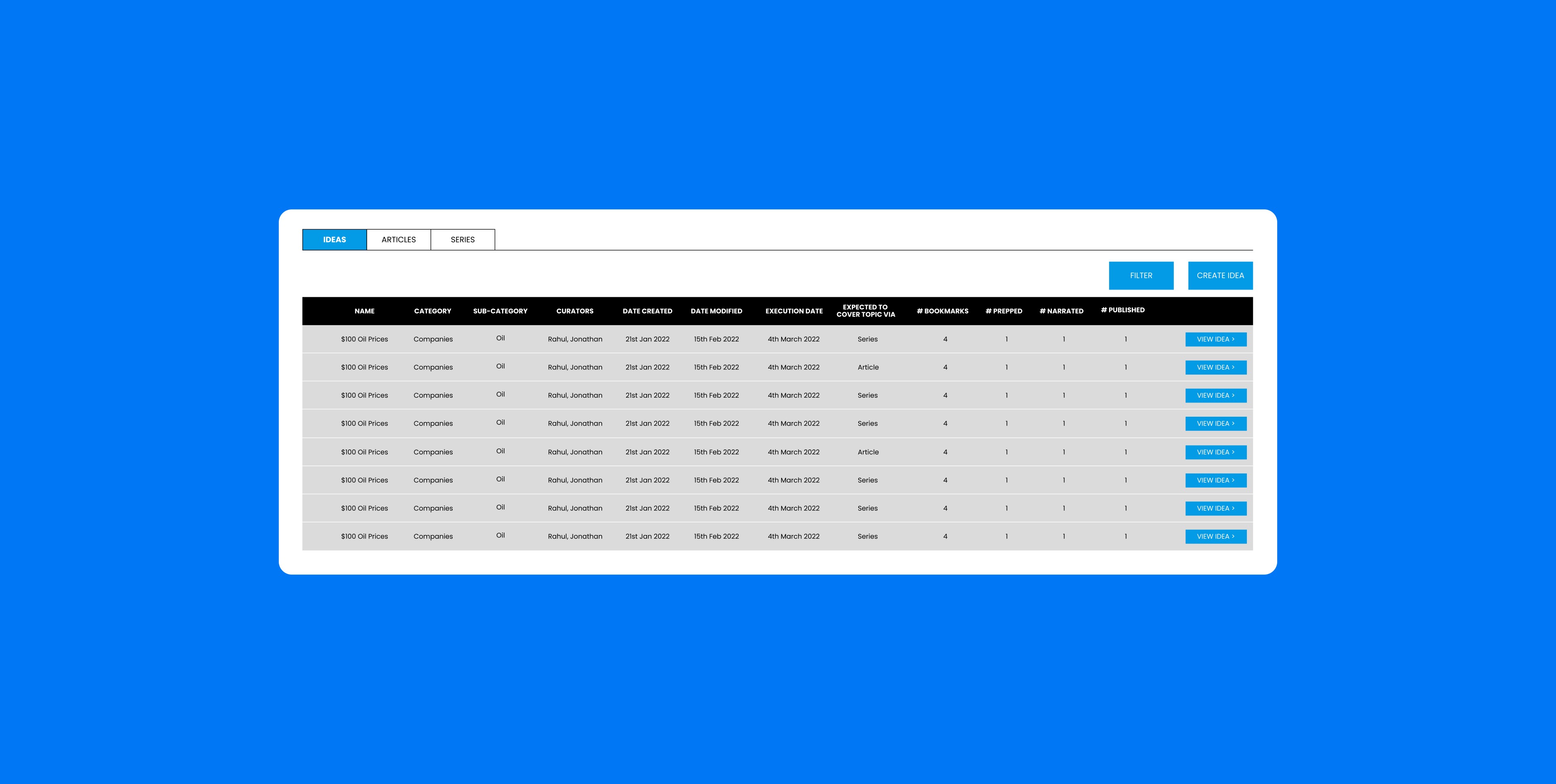
Prototyping and User Testing
The prototypes underwent extensive testing with the editorial team, whose feedback was instrumental in refining the designs. Adjustments were made to enhance the user flows based on this new data. We took special note of the flow that editors deemed most efficient and intuitive.

UI Design
In the UI design phase, we embraced a clean yet contemporary aesthetic. The redesign focused on optimizing whitespace to improve readability, while still maintaining information density in critical areas to enable editors to make informed decisions without excessive navigation. The introduction of new color schemes and visual elements was strategic, allowing editors to quickly assimilate information through the use of distinct, eye-catching colors.
Problems Identified and Solutions
Disjointed Bookmarking Workflow
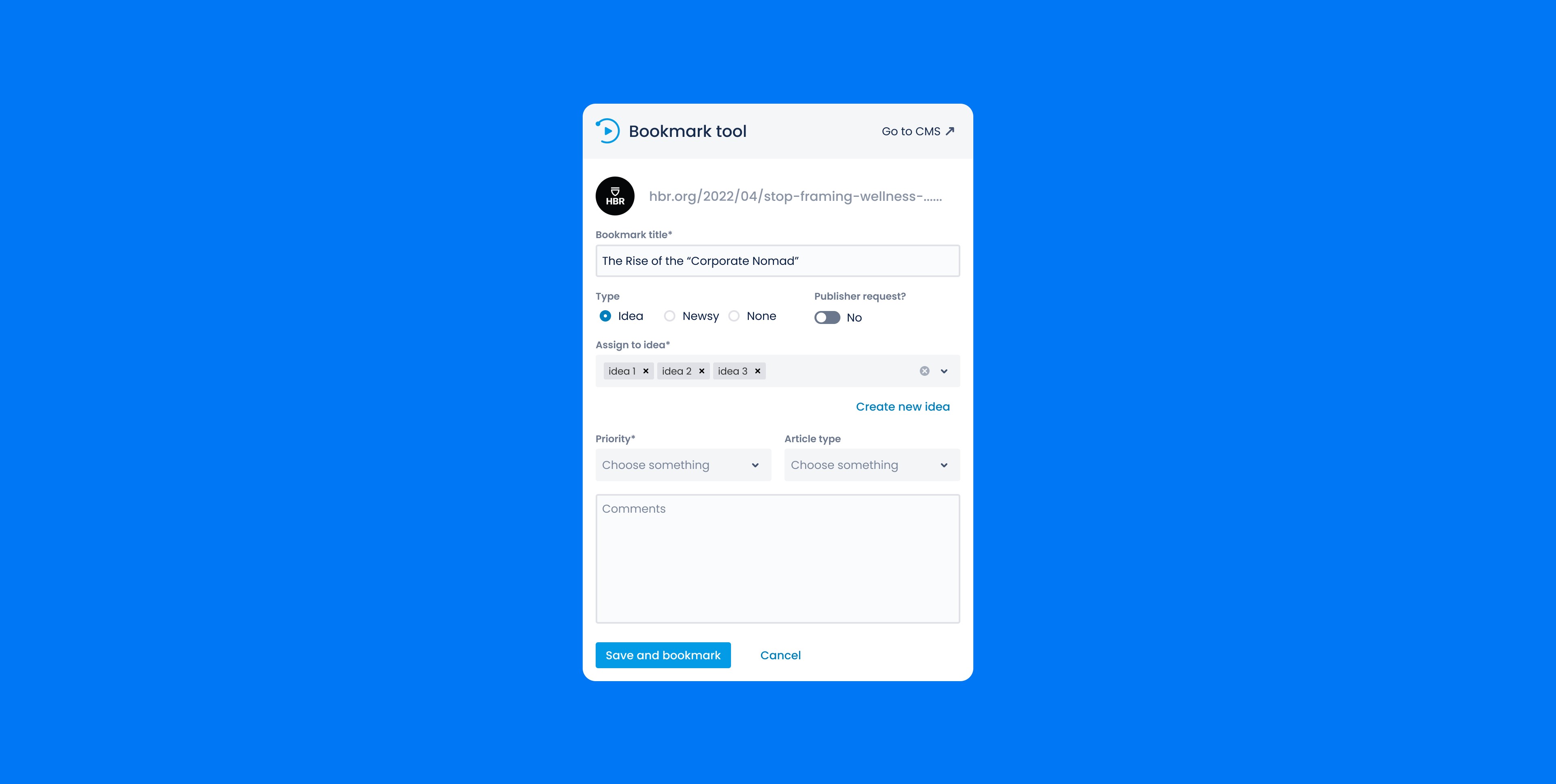
Editors relied on external bookmarking tools to earmark articles for publication, leading to a disjointed workflow between the bookmarking tool and the CMS. This process was not only cumbersome but also hindered synchronization among the editorial team.
Solution
We developed an integrated Noa bookmarking tool within the CMS, ensuring seamless synchronization of bookmarks and facilitating collaborative decision-making directly within the CMS environment.
Inefficient Article Prioritization
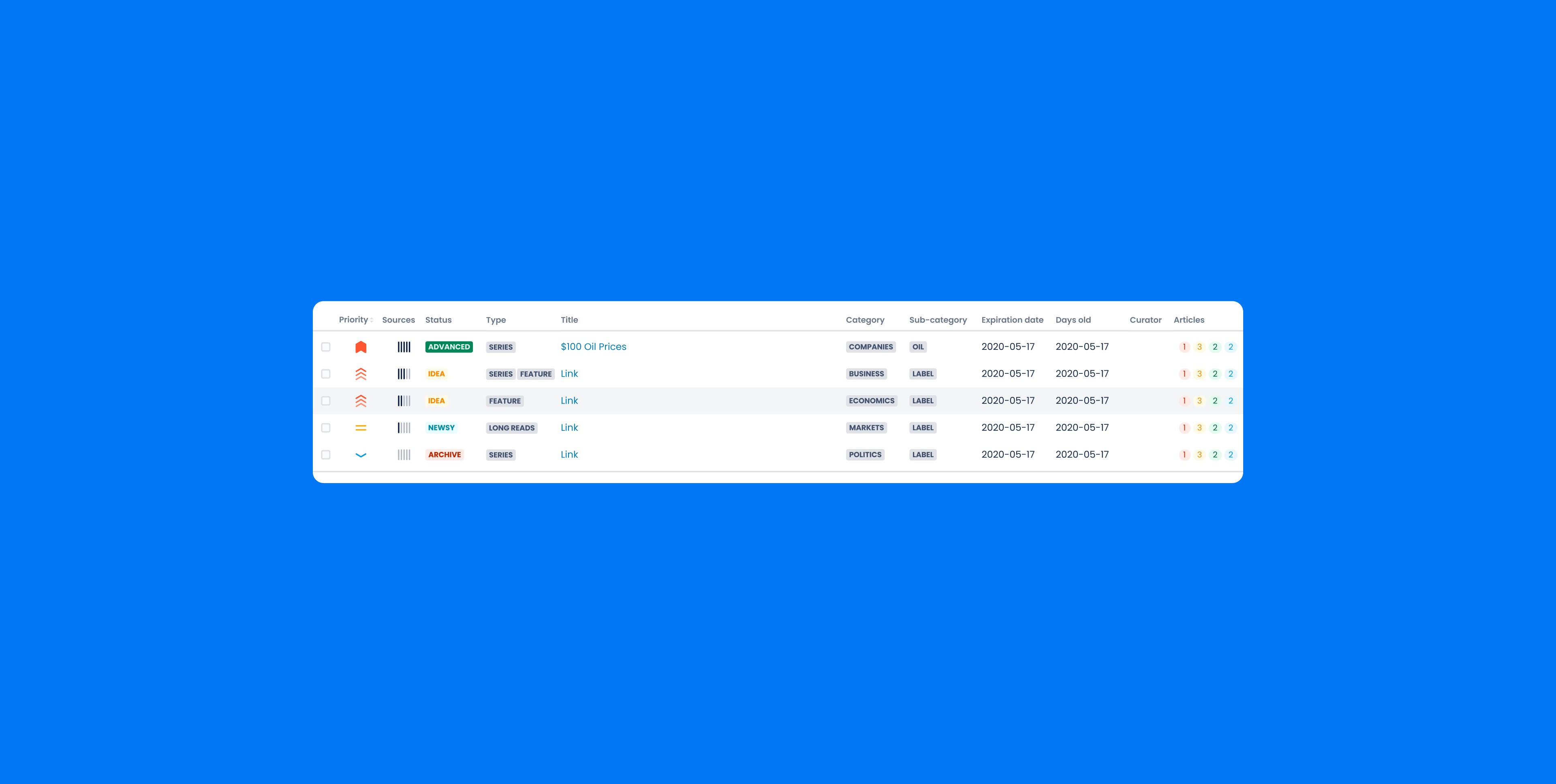
Editors manually manipulated Excel sheets to prioritize topics and articles, a process that was time-consuming and error-prone, with the CMS relegated to a mere production tool.
Solution
A dynamic coverage board was introduced, encapsulating the functionalities previously handled in Excel. This board automated certain tasks and provided tools to streamline the selection process, with customization options to adapt to varying weekly business parameters.
Cumbersome Narrator Communication
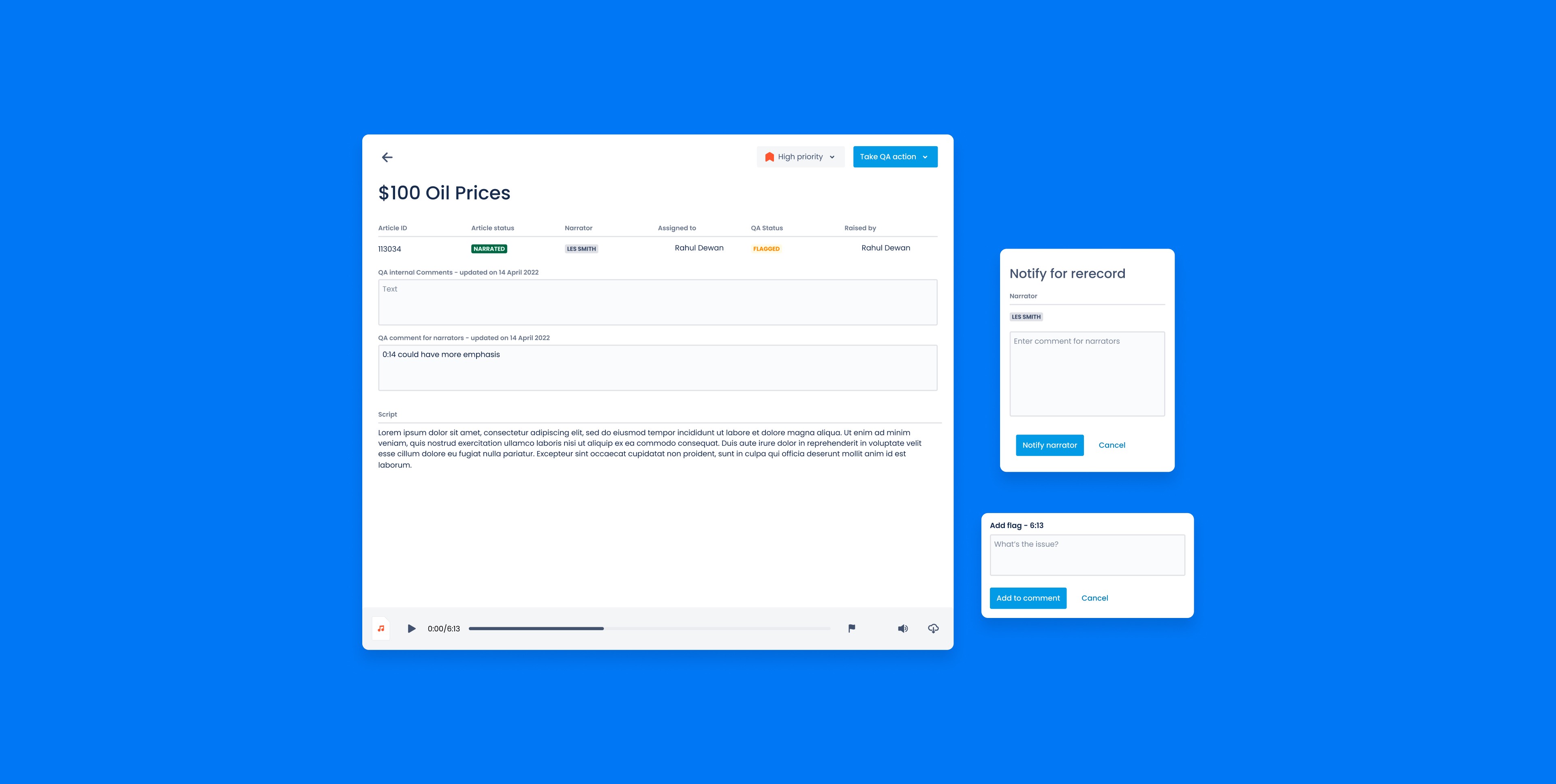
Extensive time was spent by editors in communicating with narrators over script changes, with quality assurance (QA) being conducted manually, complicating the tracking of revisions and uploads.
Solution
The implementation of a comprehensive QA tool within the CMS revolutionized the editor-narrator communication. New features expedited the QA process, and a system for flagging articles for re-narration was introduced, enhancing efficiency.
Pronunciation Guide Management
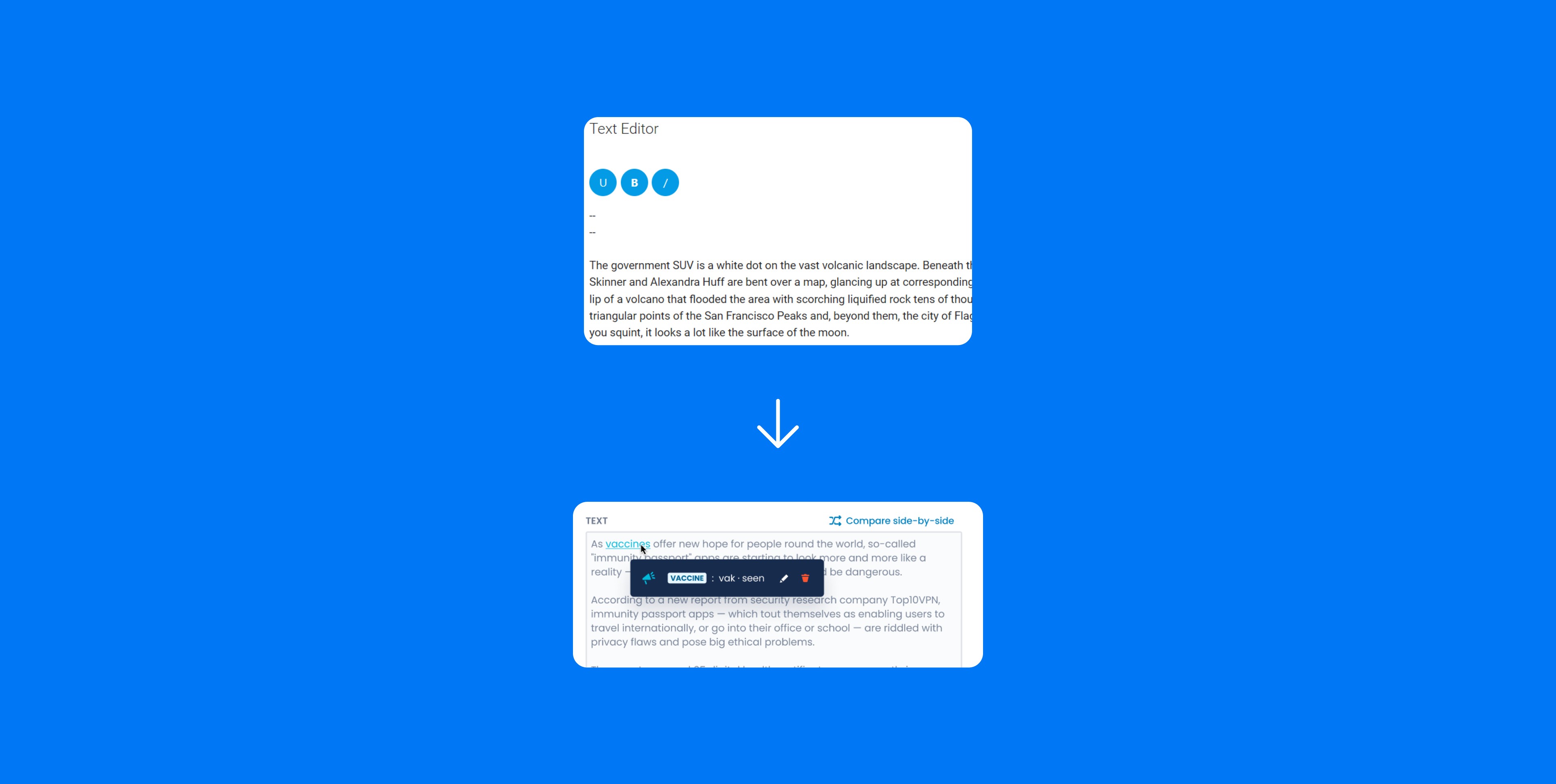
The management of the internal narrator guide for pronunciations was labor-intensive and susceptible to errors, compounded by a non-intuitive user interface.
Solution
We reimagined the pronunciation guide workflow, automating a significant portion of the verification process. The UI transitioned to a tooltip-based system, simplifying the viewing and adjusting of guide entries.
Results
The strategic overhaul of the Noa CMS yielded transformative results:
The production process for an audio article was streamlined, reducing the number of steps by a threefold decrease.
Working efficiency experienced a remarkable 50% increase, attributable to the meticulous redesign.
Instances of errors, previously exacerbated by miscommunication and information transfer gaps, were curtailed by 30%.
The feedback from the editorial and narrator teams was overwhelmingly positive. They lauded the revamp for its potential to significantly simplify their daily operations and enhance overall productivity.
Learnings
This project presented a unique challenge that required me to immerse myself in an unfamiliar workflow. It was a journey of discovery, where I learned to view processes through the lens of another user. This experience sharpened my ability to discern the subtleties of their operational dynamics and identify pivotal opportunities for optimization. It was a deep dive that not only broadened my understanding of user-centric design but also honed my skills in targeted problem-solving.
Summary
Implemented a comprehensive redesign of the Noa CMS to streamline audio article production, resulting in a threefold reduction in production steps and a 50% increase in efficiency.
Achieved a 30% decrease in errors through improved communication channels and information transfer processes.
Received overwhelmingly positive feedback from both editorial and narrator teams, noting the revamp’s impact on easing daily tasks.
Developed integrated tools such as an internal bookmarking system and a coverage board to enhance collaboration and decision-making within the CMS.
Embraced a deep-dive into unfamiliar workflows, gaining insights into editor needs and optimizing the CMS from their perspective.
Gained valuable experience in understanding and optimizing workflows from a user’s viewpoint, enhancing targeted problem-solving skills.